May 5–6, 2026: A National Unity Strike
By Fort Bend Truth & Times
In the spring of 1963, Black Americans across the South did something radical: they stopped. They stopped riding segregated buses. They stopped shopping in downtown stores. They stopped showing up to jobs that denied them dignity. The Birmingham Campaign, the Montgomery Bus Boycott, and the Memphis sanitation strike all sent the same message: a nation that depends on our labor must respect our humanity.
In May 2026, that message returns.
On May 5 and 6, millions of Americans who are immigrants, naturalized citizens, and families tied to the world beyond U.S. borders are preparing for what organizers call a National Unity Strike—a coordinated pause from ordinary economic participation. It is not about chaos. It is about visibility. It is about reminding the country who keeps the wheels turning. And it is about history.
A Modern Civil-Rights Moment
The civil-rights movement was not only fought in courtrooms and on bridges—it was fought at cash registers, factory floors, and payroll offices. When people withdrew their economic participation, the country was forced to listen. That is the blueprint now.
More than 46 million U.S. residents are foreign-born, and tens of millions more are first-generation Americans. Together they form one of the largest labor and consumer bases in the nation: construction, logistics, agriculture, health care, hospitality, tech, retail, food service, transportation, and manufacturing. These Americans are not a niche. They are the backbone.
Yet in 2025 and early 2026, sweeping immigration crackdowns, deportation expansions, and the dismantling of humanitarian programs sent a chilling signal: millions of families are being treated as disposable. May 5 and 6 is their answer.
Why a Strike?
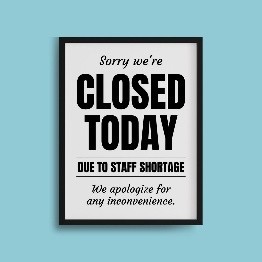
Strikes work when speeches don’t. You can ignore a press conference. You cannot ignore empty shelves, stalled freight, darkened kitchens, closed construction sites, and quiet warehouses. The Unity Strike asks participants to pause their everyday economic routines for two days. No marches are required. No confrontation is needed. The power is in absence.

The Economic Footprint
The economic footprint of immigrant and mixed-status households in the United States exceeds $3 trillion annually. They are not only workers, but they are also renters, homeowners, small-business owners, truck drivers, nurses, teachers, contractors, grocery shoppers, and taxpayers.
Two days of nationwide non-participation would be felt immediately. Retail sales would dip. Restaurants would lose staff and customers. Shipping would slow. Construction timelines would slip. Service industries would stall. The point is not destruction. The point is recognition. This economy does not run without the people now being told they don’t belong.
A Peaceful, Constitutional Protest
The Unity Strike is not a riot. It is not sabotage. It is not lawlessness. It is protected speech. The Constitution protects the right to withhold labor, to boycott, to assemble, and to protest peacefully. Workers strike. Consumers boycott. Communities pause. That is American as the Boston Tea Party—especially when those being marginalized refuse to be invisible.
Why May 5?
May 5—Cinco de Mayo—has become a symbol of Latin American heritage and immigrant labor in the United States. From Texas farmworkers to New York delivery drivers to California nurses to Florida hospitality workers, the date carries cultural and political weight. But the Unity Strike is not only Latino. It includes African immigrants, Asian Americans, Caribbean families, Middle Eastern communities, Eastern Europeans, Africans, and anyone whose family story began somewhere else—which is, ultimately, most of America.
Echoes of the 1960s
When Dr. Martin Luther King Jr. went to Memphis in 1968, he was there to support a sanitation workers’ strike. He understood that civil rights without economic justice was hollow. The movement succeeded because it was disruptive—not violent, but undeniable. That is what May 5 and 6 seeks to be: a peaceful interruption that demands to be seen.
What If Black America Joins?
If Black America joins the Unity Strike in full force, the moment would no longer be symbolic—it would become historic.
African Americans represent one of the most economically, politically, and morally influential communities in the nation. When Black workers, Black consumers, Black churches, and Black civic institutions move together, the country has always felt it. That was true in Montgomery. It was true in Birmingham. It was true in Memphis. It would be true again.
Organizations such as the NAACP, ACLU, LULAC and SCLC were born for moments when constitutional rights, economic justice, and human dignity collide. Their legacy is not protest for protest’s sake, but organized, lawful pressure that forces the country to confront what it has become.
A unified pause by immigrant families and Black Americans would be unmistakable: this is not a fringe movement; it is a civil-rights moment. Two communities whose histories are deeply intertwined would be saying together what Dr. King once said: “Justice anywhere is a threat to justice everywhere.”
What Happens After?
The goal is not two days. The goal is awareness, leverage, and political pressure in a year when voters are already questioning the direction of the country. Elected officials, corporations, and markets listen when labor moves—and labor is moving.
A Choice for America
This is not about left versus right. It is about whether America still believes that people who work, contribute, raise families, and pay taxes deserve a place at the table. May 5 and 6 will not be remembered for who shouted the loudest, but for who was suddenly absent.
History teaches us that when the invisible make themselves seen, change follows. The country is about to feel it.