How thriving African American towns and communities were slowly erased by policy, highways, and migration
Across Texas, there was once a map that few history books show anymore.
It was a map filled with thriving African-American towns, self-built communities, and independent Black settlements where land ownership, schools, businesses, churches, and civic life flourished. These communities were not small footnotes. Many were centers of economic independence and cultural pride that shaped generations of families.
But by the mid-1970s, many of these towns had begun to fade, shrink, or disappear entirely.
Their decline was not simply the result of time or economic change. In many cases, it was the result of deliberate policies — federal housing discrimination, highway construction that split neighborhoods apart, land loss, and economic marginalization.
Understanding these towns tells an important story about both the promise and the struggle of Black America.
The Rise of Black Towns in Texas
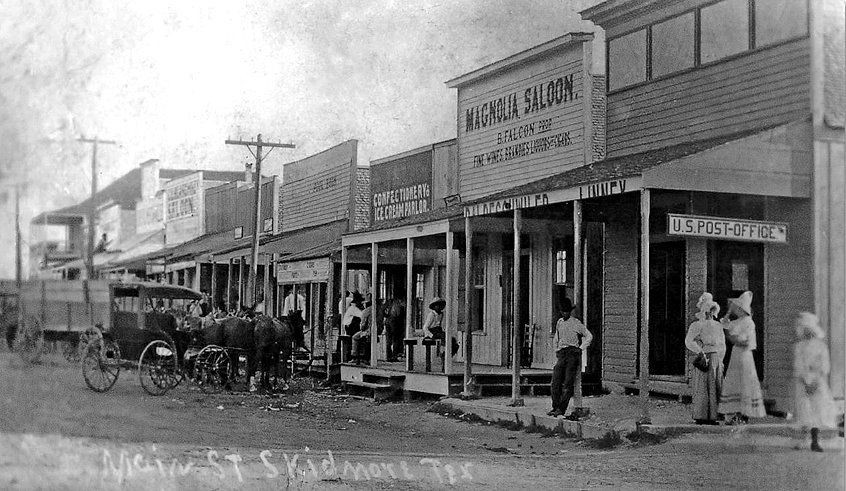
After the Civil War, thousands of newly freed African Americans sought safety, land ownership, and independence. Across Texas, they created communities built on cooperation, faith, and economic self-determination.
Many of these towns were founded between 1865 and 1910, when formerly enslaved families purchased farmland, formed cooperatives, and established their own municipal governments.
From 1865-1930, African Americans accumulated land and founded 557 historic black settlements or freedom colonies. Since their founding, freedom colony descendants have dispersed, and hundreds of settlements’ status and locations are unknown.
Gentrification, cultural erasure, natural disasters, urban renewal, & land dispossession have all contributed to their decline. Freedom colony descendants’ lack of access to technical assistance, ecological and economic vulnerability, and invisibility in public records have quickened the disappearance of these historic Texas communities.

Some of the most notable included:
Independence Heights (Houston)
Founded in 1908, it became the first incorporated Black city in Texas. The community had its own mayor, schools, businesses, and civic institutions.
Independence Heights holds a unique place in history. It became the first incorporated African-American municipality in Texas in 1915, built by Black families who purchased land and constructed their own homes and businesses.
In its early decades, the community had more than 40 Black-owned businesses, including grocery stores, restaurants, contractors, and professional offices.
Freedmen’s Town (Houston)
Located in the Fourth Ward, it was a dense urban neighborhood built by formerly enslaved people who laid thousands of hand-made bricks that still line some streets today.
Kendleton (Fort Bend County)
Originally a plantation settlement, Kendleton evolved into a majority Black rural community after emancipation and became a center of agricultural life and political leadership in Fort Bend County.
In Fort Bend County, land ownership meant political independence.
Communities like Kendleton produced respected farmers who were often called upon to represent neighbors in disputes or negotiations with county officials.
Although many individual names have been lost to time, the leadership structure was clear: the respected farmer, the minister, and the teacher formed the governing triangle of the community.
Prairie View (Waller County)
The town grew around Prairie View A&M University, one of the most important historically Black universities in the nation.
Pleasant Hill (East Texas)
Once a thriving Black agricultural community with its own schools and churches.
Clarksville (Austin)
One of the oldest Black neighborhoods in Austin, founded by formerly enslaved people in the 1870s.
Quinlan, Tamina, and Barrett Station
Other historically Black settlements formed around agriculture, railroads, and small commerce.
These towns were built on a simple but powerful foundation: land ownership and community control.
Churches served as town halls. Schools educated generations of children. Businesses — from general stores to barbershops — circulated money within the community.
For a period in the late 19th and early 20th centuries, these towns represented something remarkable: Black self-government and economic independence in the Jim Crow South.
What are Freedom Colonies?
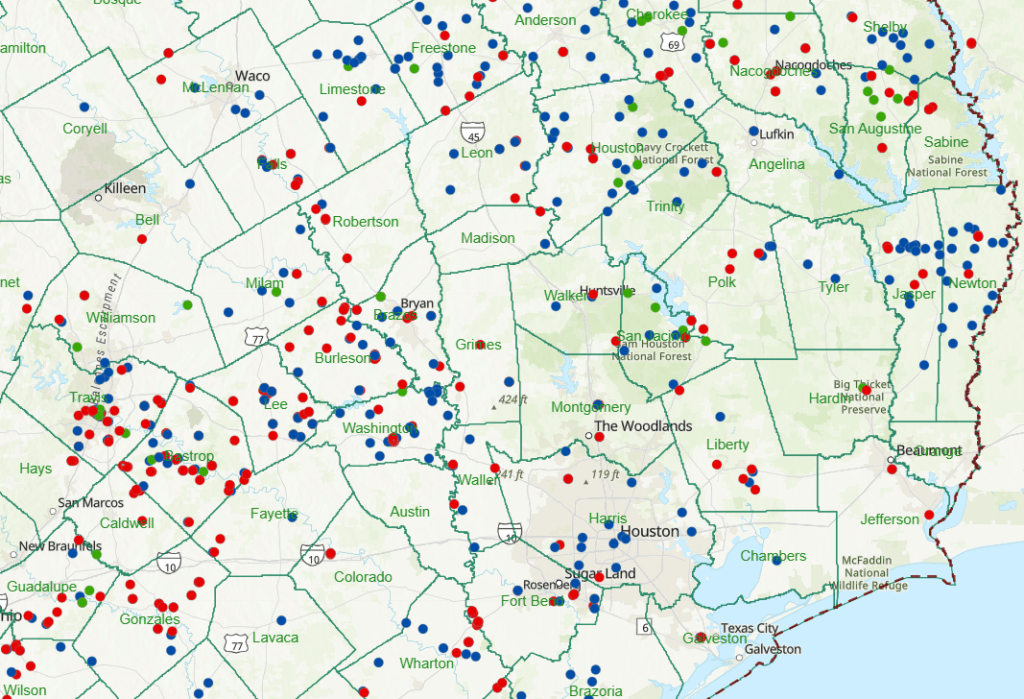
Freedom Colonies are “historically significant communities” that were settled by formerly enslaved people during the Reconstruction and Jim Crow eras in Texas following Emancipation (Sitton, 2022). From 1865-1930, African Americans accumulated land and founded 557 historic black settlements. These Freedom Colonies were intentional communities created largely in response to political and economic repression by mainstream white society.
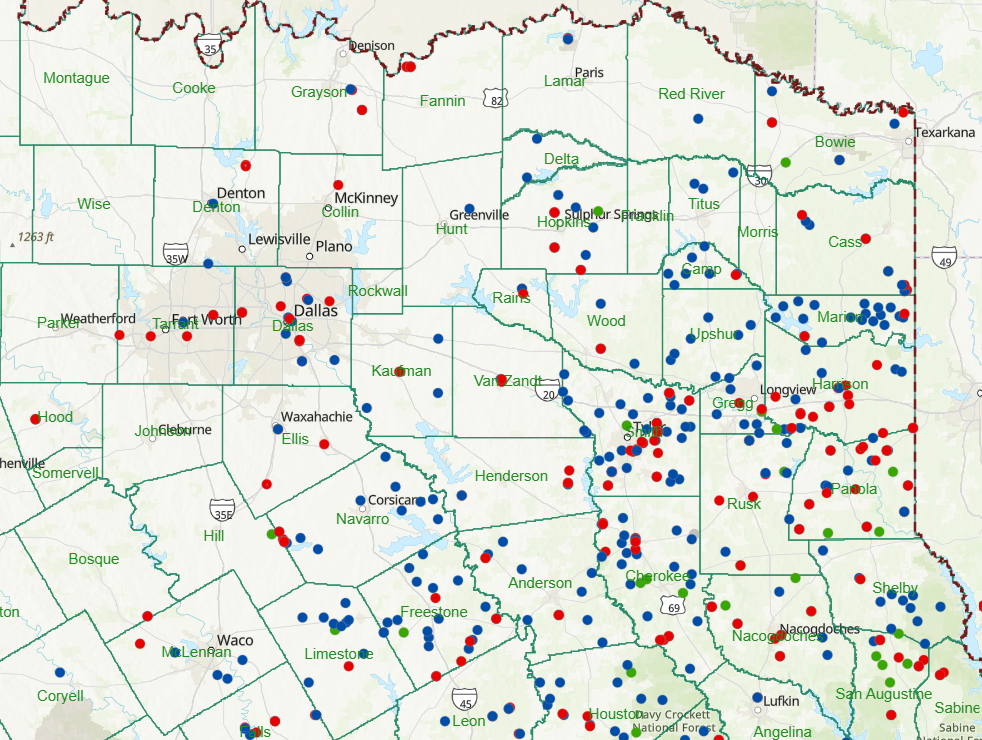
North East Texas Towns and Colonies
Freedom Colonies provided safe spaces where Black Texans could better avoid the perils of debt bondage, sharecropping, and racialized violence from white communities by living largely self-sustaining and independent lives on their own property (Sitton & Conrad, 2005). Since their founding, however, factors like gentrification, cultural erasure, natural disasters, resource extraction, population loss, urban renewal, and land dispossession have contributed to their decline—hundreds of settlements’ status and locations are currently unknown. Freedom Colony descendants’ lack of access to technical assistance, ecological and economic vulnerability, and invisibility in public records have quickened the disappearance of these historic Texas communities.
While the name “Freedom Colonies” applies uniquely to Texas settlements, Freedmen’s settlements were by no means solely a Texas phenomenon. After the Civil War, independent black communities emerged across the South. However, in the present day, Freedom Colonies find themselves in a distinct position when contrasted with their other black Southern counterparts. Many of the Freedmen’s settlements that receive scholarly or institutional attention
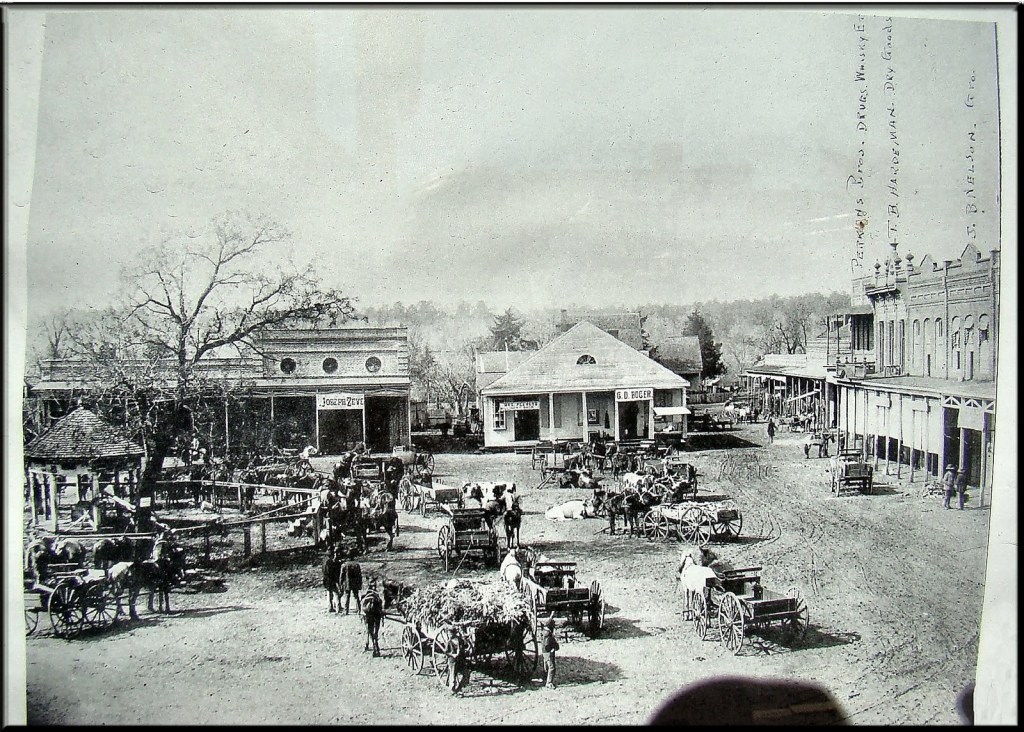
remain populated, have large anchor institutions like colleges, and are well documented, and mapped (see for example Tuskegee and Talladega, Alabama; Mound Bayou, Mississippi; and Rosewood and Eatonville, Florida). In contrast, many Texas Freedom Colonies were often never incorporated and have fledgling populations with have little documentation or legal authority to make planning decisions (Roberts & Biazar, 2019). Freedom Colonies located in urban areas, though well defined, often compete within larger political systems in which they are relegated to the category “neighborhood” or are lumped into larger geographical areas based on racial census concentrations rather than being recognized as distinct, politically sovereign communities.

When Policy Became a Bulldozer
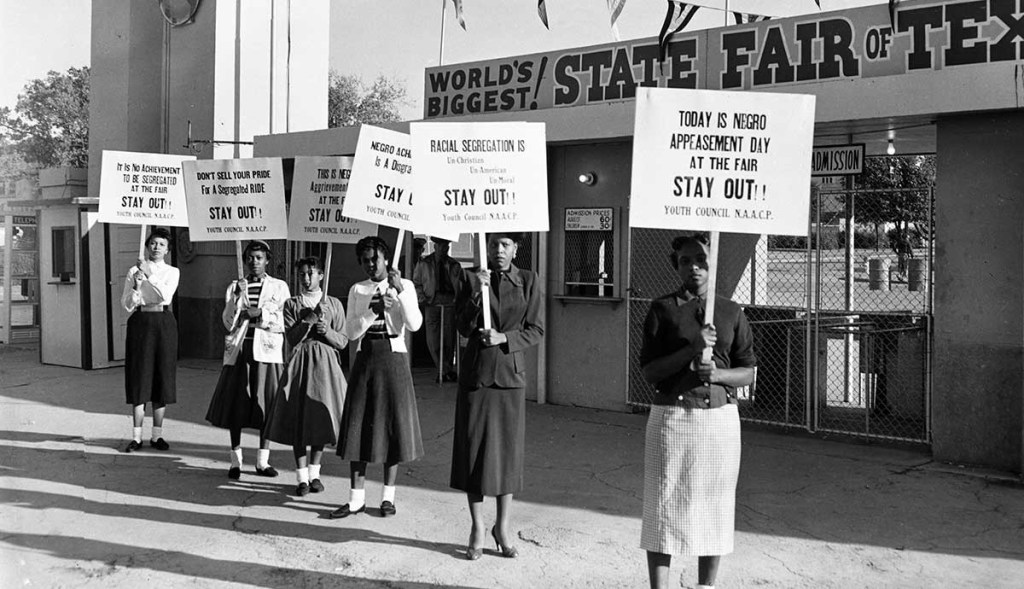
The decline of many Black communities did not begin with the Civil Rights Movement.
It began earlier — with federal housing policy.
FHA Redlining
In the 1930s and 1940s, the Federal Housing Administration (FHA) created maps that graded neighborhoods by lending risk.
Black neighborhoods were almost universally colored red, meaning banks would not lend mortgages there.
This practice became known as redlining.
The consequences were devastating:
• Black homeowners struggled to obtain mortgages
• Businesses could not access capital
• Infrastructure investment bypassed these areas
• Property values stagnated
Meanwhile, federally backed loans fueled the growth of white suburbs.
The result was a massive transfer of wealth away from Black communities.
Highways Through the Heart of Communities
The next blow came in the 1950s and 1960s with the Interstate Highway System.
Across the country, highway routes were often placed directly through African-American neighborhoods.
The pattern happened repeatedly:
• Houston – I-45 cut through Freedmen’s Town
• Austin – I-35 divided East Austin
• Dallas – Central Expressway displaced Black neighborhoods
• Fort Worth – I-35 and other highways reshaped historic districts
Highways did not simply pass through communities.
They destroyed them.
Entire blocks of homes were demolished. Businesses disappeared. Families were relocated to public housing or scattered across metropolitan areas.
Where vibrant neighborhoods once stood, there were now overpasses, interchanges, and industrial zones.

Land Loss and the Great Migration
At the same time, many Black farmers faced another challenge: land loss.
Between 1910 and 1990, African Americans lost more than 90 percent of their farmland in the United States.
The causes were complex:
• Discriminatory lending practices
• Property tax foreclosures
• Partition sales among heirs
• Legal manipulation of heirship property
• Migration to northern cities for industrial jobs
The Great Migration saw millions of African Americans leave the South between 1916 and 1970.
For many, cities like Chicago, Detroit, and Los Angeles offered opportunity and safety from rural racial violence.
But migration also meant that some Black towns in Texas slowly emptied.
Violence and Intimidation
Not all declines were economic.
Some were the result of direct violence.
Throughout American history, successful Black communities have often become targets.
The most famous example remains Tulsa’s Greenwood District, known as one of the Black Wall Streets, destroyed in 1921.
But similar attacks happened across the country:
• Wilmington, North Carolina (1898 coup)
• Rosewood, Florida (1923 massacre)
• Elaine, Arkansas (1919 violence)
Even when large-scale massacres did not occur, the threat of violence and intimidation shaped where African Americans could safely live and build.
The Quiet Disappearance of Communities
By the 1970s, many historic Black towns faced a difficult reality.
Young people moved away for opportunity.
Schools consolidated.
Farms were sold.
Infrastructure bypassed them or split these towns.
Some towns survived but shrank.
Others were absorbed into growing cities.
Still others exist today only as names on old maps.
The Resilience That Remains
Despite these losses, many communities continue to survive.
Prairie View remains a center of Black education.
Kendleton still holds deep historical roots in Fort Bend County.
Tamina continues to fight for infrastructure and preservation.
Across Texas, churches, cemeteries, and family land still hold the stories of these towns.
Historians today are working to preserve this legacy — documenting oral histories, restoring historic buildings, and recognizing these communities as essential parts of American history.
Our Perspective: A Pattern in American History
When we look across the country, a pattern becomes difficult to ignore.
Black communities in America have often followed a similar arc:
- Formation through resilience
- Economic success and self-determination
- Targeting through policy, violence, or economic isolation
- Disruption or dismantling
From Black Wall Street in Tulsa, to Durham’s Hayti District, to towns across America, success has sometimes made Black communities visible — and vulnerable.
Yet the deeper truth is not simply loss.
It is endurance.
These towns built churches that still stand.
They educated generations who became doctors, teachers, soldiers, and leaders.
They laid the foundation for modern Black political and economic progress.
Why This Story Matters Today
Today, as Texas and the United States continue to grow, the lessons of these communities matter more than ever.
Development, infrastructure, and economic expansion should not erase history.
Instead, they should recognize and honor the communities that built the foundations of our cities and counties.
Because behind every disappearing town is something more than geography.
It is memory.
It is identity.
And it is the story of Americans who built prosperity against extraordinary odds.
Their legacy deserves to be remembered — not just in history books, but in the future of the places they helped create.