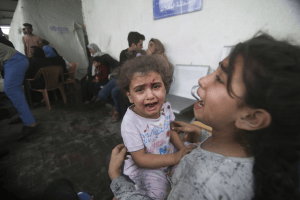
The world is crying – Fort Bend Truth & Times
The wars filling October’s headlines are being fought across several regions, but their effects are traveling much farther. A missile strike can threaten a city’s power supply. A maritime attack can disrupt fuel shipments. A battle over territory can force families from their homes and push them toward dangerous work just to survive.
The most far-reaching conflict this month is the war involving Iran, the United States and Israel. The fighting has put the Strait of Hormuz—a vital route for global oil and liquefied natural gas shipments—at the center of international diplomacy. Iran’s foreign minister said October 18 that Tehran’s proposal to reopen the strait within seven days remained on the table. Before the war, roughly one-fifth of global oil and liquefied natural gas trade passed through the waterway. The countries remain divided over the terms: Iran wants negotiations to begin with reopening the strait and ending hostilities across regional fronts, while Washington wants Iran’s nuclear program addressed.
The dispute is not confined to diplomats and naval forces. Risk to commercial shipping and uncertainty over energy supplies can affect prices, transportation and household costs around the world. The danger has also spread south. Yemen’s Iran-aligned Houthi movement has intensified attacks on Saudi targets, including Riyadh’s airport and the headquarters of Saudi oil company Aramco, according to Reuters. Saudi-backed forces and the Houthis are fighting in Yemen, while aid agencies warn that renewed clashes have disrupted assistance and left hospitals overwhelmed. The conflict threatens two major sea routes: Hormuz and the Bab el-Mandeb, which connects the Red Sea to the Gulf of Aden. Reuters
In Ukraine, October has brought more civilian deaths and renewed attacks on energy infrastructure as winter approaches. The United Nations verified that 328 civilians were killed and 2,105 injured in September, and said civilian casualties remained high into October. An October 13–14 attack on energy facilities temporarily left 600,000 people in Kyiv without electricity, according to Ukrainian authorities cited by the UN. The UN warned that repeated attacks on electricity and heating infrastructure could deepen the suffering of civilians in the cold months ahead.
The battlefield picture remains contested. Russia has claimed significant territorial gains since September, including 92 settlements. Ukraine disputes those figures, saying Russian leaders are exaggerating their progress. Reuters reported that it could not independently verify either side’s territorial claims. What is clearer is that both countries continue to strike targets far from the front: Russia’s attacks threaten Ukrainian power and heating, while Ukrainian drone operations have hit Russian refineries, ships and warehouses. Reuters
In Sudan, the conflict’s toll is visible in the choices people must make to survive. Three years of war between the Sudanese armed forces and the paramilitary Rapid Support Forces have damaged the economy and displaced people from their homes. Some have turned to small-scale gold mining, despite the hazards and the danger of working in isolated border areas. The Guardian reported that Sudanese rights group Emergency Lawyers said at least 114 miners were killed in an October 10 strike on a mine near the Egyptian border. Egypt acknowledged operations against illegal mining but did not address the reported airstrike directly. The death toll and responsibility have not been independently confirmed.
The miners’ story is one piece of a wider humanitarian emergency. On October 16, a senior UN official told the Security Council that people in Sudan face relentless fighting, severe economic hardship and the collapse of basic services. In a separate statement, the UN expressed alarm over a drone strike near a displacement site in Blue Nile State. Civilians, aid workers and displaced families continue to face danger even when they are far from the front lines. DPPA
Gaza and Lebanon remain part of the region’s overlapping crises. The UN’s Middle East peace coordinator said the Gaza situation was extremely fragile one year after a ceasefire, with continued military operations, dire humanitarian conditions and risks rising ahead of winter. A UN report said humanitarian operations faced limits on access, supplies and funding. A ceasefire can reduce fighting without resolving the conditions that leave people without safe housing, reliable services or enough aid. DPPA
October’s international story is not only about war. Brazil is preparing for an October 25 presidential runoff that could shape the future of the Amazon rainforest. New government data reported this month showed deforestation had fallen to its lowest level since records began in 1988. The two candidates have sharply different approaches to environmental protection and resource development. The outcome matters well beyond Brazil because the Amazon is home to Indigenous communities and plays an important role in the global climate.
For Fort Bend County residents, these events can seem distant until their effects appear in the price of fuel, the cost of shipping, or the arrival of families seeking safety. Conflict also places pressure on public budgets and humanitarian organizations while raising questions about energy security and the protection of civilians.
The facts of October are still unfolding. Iran’s offer to reopen Hormuz may lead to talks, or the dispute may widen. Ukraine is bracing for winter attacks. Yemen’s fighting is testing Saudi Arabia’s security and investment ambitions. Sudan’s civilians continue to endure a war with no clear end. In Gaza, humanitarian needs remain acute even under a ceasefire.
The world’s leaders face a common test: whether they can protect civilians, keep essential aid moving and pursue negotiations before more lives are lost. For now, October’s defining international stories show how quickly a regional war can become a global concern—and how often ordinary people bear the cost.